
Got art gathering dust? You’re not alone.
(Avoid Common Mistakes When Choosing Frames for Art Prints!)
Do you need suggestions for getting the best frames for art prints? Everybody’s got art stashed away somewhere—under the bed, behind the coats, deep in the basement. Cool prints still rolled up in shipping tubes. Canvases you bought at that funky wine-country art fair when you were buzzed on merlot and sunshine. (Remember that? No, you don’t. That’s OK.)
And what about the busted frames? The crummy, outdated ones you grabbed in college when you were broke and didn’t know better? Those need to go. The forgotten art needs to get framed. Trust me. I know.
I used to work part-time at a great little art and frame shop in Brooklyn — KC Arts on Court Street—and those framers knew their stuff. Here’s what I learned from them: a handful of hard-earned, oddly specific, and very practical tips from framers.
“A great frame job is like a jewel in a setting.” — Sherry
(How to Choose the Best Frames for Art Prints)
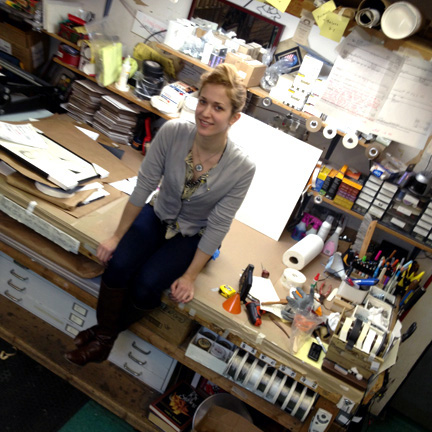
Sherry, a Michigan native and psychology student at Brooklyn College, put it perfectly:
“A great frame job is like a jewel in a beautiful setting—it lets you appreciate the jewel without distracting from it.”
A good frame doesn’t compete with your art; it elevates it. Think of it as your art’s home—a protective house with a window, walls, and a sturdy back door. And if you need art suggestions…
Framing serves three main purposes:
Protection (acid-free matting, UV glass),
Display (you can actually enjoy it), and
Enhancement (the right frame just feels right).
“UV glass is your friend.” — Lauren Rubin
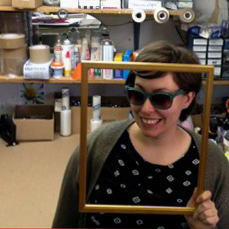
Lauren is not only a framing machine—she’s also a punk musician, artist, and the creative mind behind Schmutzerland jewelry. Her advice:
“If you’re framing anything on paper, get UV-protective glass.”
According to the National Fenestration Rating Council, about 40% of fading is caused by UV radiation. You can prevent that—and keep your art looking crisp for years—by using UV glass and avoiding direct sunlight.
So, do your future self a favor. Invest in UV protection. It’s like sunscreen for your art.
“Use bumpers.” — Ralph
(An Easy Trick When You Hang Your Art Prints at Home)

Ralph runs KC Arts, a shop his mom started 30-some years ago. When I asked him for his number-one tip, he didn’t hesitate:
“Use bumpers.”
What are bumpers?
Tiny felt or rubber dots that stick to the back corners of a frame. They protect your walls, add grip, and keep your art from sliding crooked when a truck rumbles by—or Uncle Larry stumbles into the wall after Thanksgiving dinner.
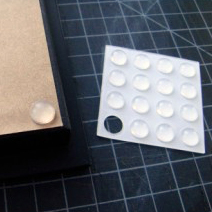
They’re cheap. They’re genius. Ask for them by name.
Bumpers: because nobody likes a crooked masterpiece.
“Go standard.” — Jordan Greenhalgh (Why the Best Frames for Art Prints Aren’t Always the Most Expensive!)
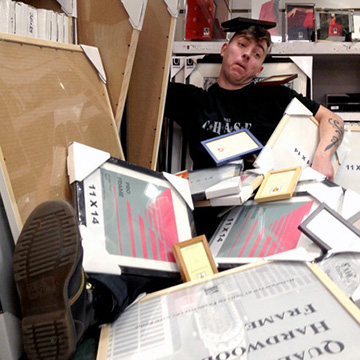
Jordan is an animator, tattoo enthusiast (Ralph Steadman illustrations on his head, no joke), and weekend framer at KC Arts. His tip is simple and smart:
“When making something, consider pre-made frame sizes so you don’t have to spend money on custom framing.”
Most shops offer ready-made frames in popular sizes like 11″×14″, 16″×20″, and 18″×24″. If you’re creating new work, plan your piece around one of these. You’ll save a bundle without sacrificing style.
Pro tip: Bring your artwork with you when you shop—frame fit can vary slightly, and you don’t want a “close enough” surprise later.
5. “Find an experienced framer—and be ready to invest.” — Ray
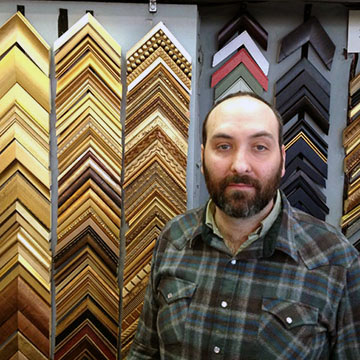
Ray’s been framing for nearly 20 years. His advice?
- Find a reputable, experienced framer.
Framing isn’t a certified trade; it’s a craft learned by doing. Ask around. Look for longevity. When you find a framer you trust, stick with them. - Be prepared to spend a little money.
Yes, you can buy cheap frames at IKEA. But a custom frame is built to fit, protect, and enhance your art. You’ll get the perfect moulding, color, and proportion—and an expert who helps you make the right choices.
Pro-rate that cost over the next 10, 20, even 50 years you’ll enjoy your art hanging proudly on your wall. It’s not an expense. It’s an investment in joy.
So go frame your stuff already.
All that forgotten, rolled-up, or busted art? It deserves to live its best life—on your wall, in a frame that fits, protects, and shows it off.
You’ll smile every time you walk past it. You’ll remember that trip, that moment, that buzz of discovery. And you’ll be glad you finally did it.
HELPFUL RESOURCES
When You Have Related Questions About Finding the Best Frames for Art Prints
- American Institute for Conservation (AIC) — on protecting works on paper and canvas
- Frame Destination’s Guide to Framing Materials — glazing, matting, and moulding explained
- Artfinder’s framing tips — more practical advice for artists and collectors
Bottom line:
Good framing doesn’t just make art look better—it makes life look better. Frame your memories. Frame your weird little wine-country paintings. Frame your joy.
Bumpers optional, but highly encouraged.
More art thoughts on my blog.